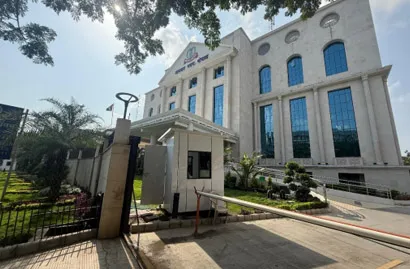
Simple, Versatile, and Affordable GRIHA (SVAGRIHA) Rating, has been developed to promote the concept of green buildings and sustainability among small-scale stakeholders, such as owners of bungalows and small offices. It serves as a simple guidance-cum-rating tool for the general public, aimed at minimizing greenhouse gas (GHG) emissions from small-scale constructions.

SVAGRIHA Precertification
Introduction
Intent
The intent of the rating is to encourage small-scale buildings to adopt sustainable practices and transition towards green building principles.
Salient Features
Designed for small projects
The system acknowledges the requirement of rating tool for small projects thus integrating features applicable to smaller projects. The rating system will also help the project team to understand the qualitative and/or quantitative impact of their project on the environment.
Good Life Goals
The Good Life Goals (GLGs) were rolled out by the United Nations to encourage, individuals to participate in improving the health of our planet and live in harmony with the nature and other beings. The GLGs aim at the larger goal of achieving the 17 Sustainable Development Goals (SDGs). ‘The SDGs, also known as the Global Goals, were adopted by the United Nations in 2015 as a universal call to action to end poverty, protect the planet, and ensure that by 2030 all people enjoy peace and prosperity’ (UNDP 2021). SVAGRIHA targets to achieve a few of the GLGs by adopting the design guidelines specified in various sections of the rating system.
Integration with Standards, Codes and Policies
SVAGRIHA has been formulated in accordance with the various national and international standards, codes and policies like BEE Standards & Labelling Programme, Energy Conservation Building Code (ECBC) and Eco-Niwas Samhita (ECBC-R), ASHRAE 62.1-2019 and National Building Code.
Benefits/Advantages of adopting SVAGRIHA Precertification
Ergonomics
It aims at creating user satisfaction through optimized design solutions.
User friendly and easy to implement
With minimum requirements for extensive documentation, the rating is suitable for smaller projects with limited dependency on all the stakeholders of the project.
Enhanced recognition
With small projects being limited to a smaller segment, the rating enhances the visibility of the project in the market.
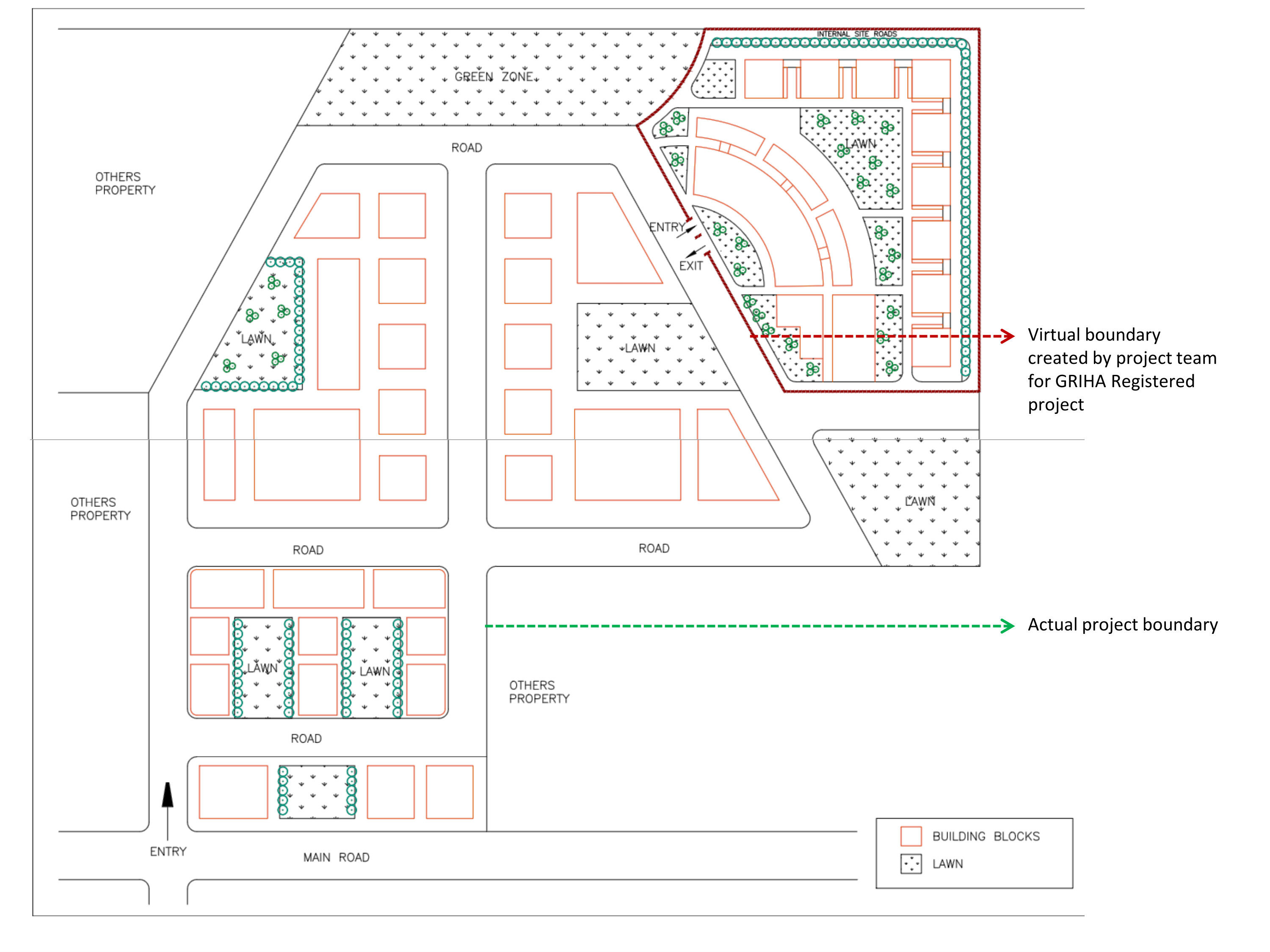
Eligibility & Virtual Boundary
Project Boundary
Virtual Boundary
Rating Fees
Fee Summary
The fee for the SVAGRIHA Precertification is INR 30,000 /- (exclusive of taxes).
SVAGRIHA Precertification Thresholds
Percentile Threshold
Achievable Star Rating
25-29
30-34
35-39
40-44
45-50
Fast-Track Process
The fast-track process is intended to provide handholding support to projects that need a faster clearance for various business and government approvals. It reduces the time required for rating while maintaining the integrity and accuracy of the GRIHA rating system.
| GRIHA Process – Normal vs Fast Track | ||
|---|---|---|
| Review Stage | Normal Review Timeline | Fast Track Review timeline |
| Review of First Submission | Within 15-20 working days | Within 5-7 working days |
| Final Review | Done within 10-15 working days after receipt of 2nd documentation. | Will be done within 3-5 working days after receipt of 2nd documentation |
Section Weightages
Grand Total
50+2
Points
GRIHA for Interior Spaces Rating
Introduction
The GRIHA for Interior Spaces (InS) emerges as a framework, addressing the pressing need for sustainable, eco-conscious, and socially responsible interior spaces. At its core, GRIHA for Interior Spaces is a comprehensive solution, integrating diverse aspects of interior design.
Intent
GRIHA for Interior Spaces redefines the approach to interior spaces. It signifies a paradigm shift—a commitment to creating spaces that are in harmony with the nature, promoting occupant wellbeing, and uphold the principles of environmental stewardship. By embracing the principles outlined in GRIHA for Interior Spaces, designers, architects, and all stakeholders contribute significantly to a sustainable future, shaping interior spaces that resonate with the ethos of our culture & traditions.
Salient Features
Encourages Use of Eco-Friendly Materials
The rating encourages use of recycled materials, Low-VOC paints and adhesives, Sustainable furniture and finishes.
Focus on Interiors
GRIHA for Interior Spaces is specially designed for projects that focus on interior design offering a flexible, relevant, and practical tool to improve the sustainability of interior environments—without requiring control over the entire building.
Benefits/Advantages of adopting GRIHA for Interior Spaces Rating
Indoor environment quality
Ensures healthier and more comfortable indoor spaces by enhancing thermal, visual, and acoustic conditions, along with maintaining high indoor air quality (IAQ) through improved ventilation and air filtration practices.
User friendly and easy to implement
With minimum requirements for extensive documentation, the rating is suitable for operational buildings, including those with limited resources or stakeholder involvement.
Enhanced recognition
The rating highlights the project’s interior space commitment to sustainable operation and maintenance, improving its visibility, credibility, and market value. The commercial buildings especially stand to benefit even more with the optimized value of the property cost and increased tenant retention of the rated buildings.
Rating Fees
Fee Summary
| Project Typology | Built-Up Area | Interiors Rating fee |
|---|---|---|
| All | ||
| BUA ≤ 500 sq.m. | INR 1,00,000 | |
| 500 < BUA ≤ 1,000 sq.m. | INR 1,50,000 | |
| 1,000 < BUA ≤ 1,500 sq.m. | INR 2,00,000 | |
| 1,500 sq.m. < BUA | INR 2,00,000 + INR 7.5 per additional sq.m. |
This is non-refundable and needs to be paid upfront on registration of the project for the rating.
Fast Track Fees: INR 1 lakhs+ Taxes Applicable as per the Government norms.
Calculate Your Project Fee
GRIHA for Interior Spaces Rating Thresholds
| Rating Threshold | GRIHA for Interior Spaces |
|---|---|
| 25-40 | ⭐ |
| 41-55 | ⭐⭐ |
| 56-70 | ⭐⭐⭐ |
| 71-85 | ⭐⭐⭐⭐ |
| 86 and more | ⭐⭐⭐⭐⭐ |
Fast-Track Process
The fast-track process is intended to provide handholding support to projects that need a faster clearance for various business and government approvals. It reduces the time required for rating while maintaining the integrity and accuracy of the GRIHA rating system.
| GRIHA Process – Normal vs Fast Track | ||
|---|---|---|
| Review Stage | Normal Review Timeline | Fast Track Review timeline |
| Review of 1st Submission | Within 20-25 Working Days | Within 5-7 working days |
| Final Site Visit | Done within 20-30 days after sending review comments | Will be done within 5-7 working days after sending the review |
| Due Diligence report | Sent within 15 Working days after site visit | Will be sent within 2 working days after site visit |
| Final Review | Done within 8-10 Working days after receipt of 2nd documentation | Will be done within 3-5 working days after receipt of 2nd documentation |
Section Weightages
Grand Total
100 + 4
Points
Simple Versatile Affordable GRIHA Rating
Introduction
Simple, Versatile, and Affordable GRIHA (SVAGRIHA) Rating, has been developed to promote the concept of green buildings and sustainability among small-scale stakeholders, such as owners of bungalows and small offices. It serves as a simple guidance-cum-rating tool for the general public, aimed at minimizing greenhouse gas (GHG) emissions from small-scale constructions.
Intent
The intent of the rating is to encourage small-scale buildings to adopt sustainable practices and transition towards green building principles.
Salient Features
Designed for small projects
The rating caters to the specific needs of small-scale developments, integrating relevant sustainability features applicable for small scale.
Good Life Goals
The Good Life Goals (GLGs), introduced by the United Nations to encourage individuals to support global sustainability efforts. SVAGRIHA aligns with these goals through its focus on energy efficiency, water conservation, waste management, and the use of eco-friendly materials, thereby promoting sustainable living in small-scale developments.
Integration with Standards, Codes and Policies
SVAGRIHA has been formulated in accordance with the various national and international standards, codes and policies like BEE Standards & Labelling Programme, Energy Conservation Building Code (ECBC) and Eco-Niwas Samhita (ECBC-R), ASHRAE 62.1-2019 and National Building Code.
Benefits/Advantages of adopting Simple Versatile Affordable GRIHA Rating
Ergonomics
It aims at creating user satisfaction through optimized design solutions.
User friendly and easy to implement
With minimum requirements for extensive documentation, the rating is suitable for smaller projects with limited dependency on all the stakeholders of the project.
Enhanced recognition
With small projects being limited to a smaller segment, the rating enhances the visibility of the project in the market.
Eligibility & Virtual Boundary
Project Boundary
Virtual Boundary
Rating Fees
Fee Summary
SVAGRIHA:
The fee for SVAGRIHA rating system is INR 20,000 + INR 50 per square meter (exclusive of GST)
Additional cost (if opted):
- One-day workshop: INR 20,000/- (exclusive of GST)
- Intermediate (additional) site visit by GRIHA Council: INR 20,000 (exclusive of GST)
Calculate Your Project Fee
Simple Versatile Affordable GRIHA Rating Thresholds
| Points | SVAGRIHA Rating |
|---|---|
| 25-29 | ⭐ |
| 30-34 | ⭐⭐ |
| 35-39 | ⭐⭐⭐ |
| 40-44 | ⭐⭐⭐⭐ |
| 45-50 | ⭐⭐⭐⭐⭐ |
Fast-Track Process
The fast-track process is intended to provide handholding support to projects that need a faster clearance for various business and government approvals. It reduces the time required for rating while maintaining the integrity and accuracy of the SVAGRIHA rating system.
| GRIHA Process – Normal vs Fast Track | ||
|---|---|---|
| Review Stage | Normal Review Timeline | Fast Track Review timeline |
| Review of 1st Submission | Within 20-25 working days | Within 5-7 working days |
| Final Site Visit | Done within 20-30 days after sending review comments | Will be done within 5-7 working days after sending the review |
| Due Diligence report | Sent within 15 working days after site visit | Will be sent within 2 working days after site visit |
| Final Review | Done within 8-10 working days after receipt of 2nd documentation | Will be done within 3-5 working days after receipt of 2nd documentation |
Section Weightages
Grand Total
50+2
Points
GRIHA for Large Developments Rating
Introduction
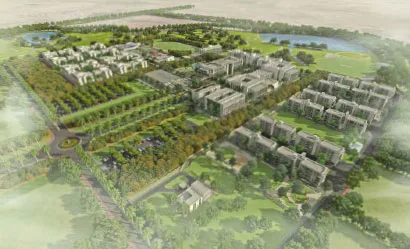
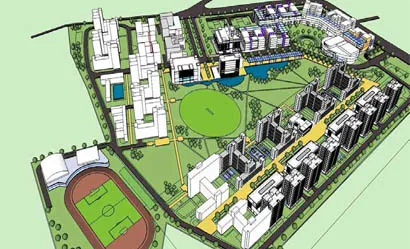
GRIHA for Large Developments (LD) Rating is developed for large scale development projects consisting of multiple buildings and supporting infrastructure which maybe developed in phases. The performance of such projects extends beyond the design of individual buildings, encompassing a broader evaluation of large-scale environmental issues and their cumulative effects on the surrounding built and natural environments.
GRIHA LD framework stresses on two aspects: first – reduction of detrimental impacts of the projects on the surroundings and second, attempt to achieve self-sufficiency in aspects like energy, water, etc. The rating provides a structured approach for assessing and guiding the sustainable planning of new townships, neighbourhoods, and large-scale developments, as well as the redevelopment and growth of existing ones.
Intent
The intent of GRIHA LD is to provide a consolidated framework for assessing the environmental impacts of large-scale developments.
Salient Features
Provides framework for reducing the detrimental impact on surroundings
reduces detrimental impact on the surroundings to the minimum and attempt to become self-sufficient in aspects like energy, water, etc.
Promotes self-sufficiency
The project encourages self-sufficiency by integrating on-site resource management systems for energy, water and waste. This includes systems such as rainwater harvesting, renewable energy generation, waste recycling, etc. These measures reduce dependency on external utilities and promote sustainable, and resilient community development.
Evaluates development quality
the rating includes several parameters enabling qualitative assessment of the development. For example, implementation of Smart Mini-Grids, meeting water quality norms, transport planning, planning for low-income group populations etc.
Benefits/Advantages of adopting GRIHA for Large Developments Rating
Holistic Campus Level Sustainability
It evaluates aspects like land use, site planning, mobility, stormwater management, energy infrastructure, waste and biodiversity ensuring the entire development is sustainable, not just individual buildings.
Phased Development Flexibility
It allows assessment at different stages of construction and operations, making it more adaptable for large townships, SEZs, industrial parks, and housing colonies.
Better Commercial Viability
Developers can market the entire township/estate as sustainable, enhancing investor confidence, improving sales, and aligning with government-backed incentives for green urban infrastructure.
Mobility & Accessibility Integration
It emphasizes public transport access, pedestrian pathways, and reduced vehicular impact, improving livability and reducing carbon emissions at the community level.
Rating Fees
Fee Summary
Master Plan Rating - INR 3.25 lakh (Fee USD - 4500$)
| PHASE WISE FEES | ||
|---|---|---|
| Site Area | Fees (INR) | Fee (USD) |
| 50 hectares | 3,00,000 per phase | 4000 |
| For every hectare above 50 | 5,500 per hectare | 75 per hectare |
Calculate Your Project Fee
GRIHA for Large Developments Rating Thresholds
| Sub-sections | Overall Weights (A) | Maximum Sub-section Score (B) | Weighted Score ( C) = (A) X (B) |
|---|---|---|---|
| Self-Sufficiency Appraisals | |||
| Energy | 0.18 | 100 | 18 |
| Water | 0.23 | 100 | 23 |
| Organic solid waste treatment | 0.12 | 100 | 12 |
| Development Quality | |||
| Site Planning | 0.08 | 100 | 8 |
| Energy | 0.09 | 100 | 9 |
| Water | 0.12 | 100 | 12 |
| Solid Waste Management | 0.06 | 100 | 6 |
| Transport | 0.06 | 100 | 6 |
| Social | 0.06 | 100 | 6 |
| Total Score | 1 | 100 | |
Percentile Threshold
Achievable Star Rating
25-40
41-55
56-70
71-85
86 and more
Fast-Track Process
Section Weightages
Grand Total
100
Points
GRIHA Existing Buildings Rating
Introduction
GRIHA for Existing Building (EB) rating is an integrated tool to assess the performance of existing buildings and provide sustainable solutions whilst augmenting the indoor comfort of the occupants. The rated buildings will enjoy enhanced energy and water performance and increased thermal and visual comfort; ultimately resulting in decreased operational and maintenance costs. The rating endeavors to provide solutions to various typologies and ages of building catering to the diverse climatic zones of India, and include RWAs & users of habitats in the process.
Intent
GRIHA for Existing Buildings rating is designed with underlining objectives, such as attaining environmental impact reduction, simplicity in execution, alignment with local and national goals, and cost effectiveness.
Salient Features
Designed specifically for existing buildings
GRIHA EB is specifically designed to assess and improve the environmental performance of existing buildings which evaluates buildings based on operational performance.
Supports goals of Government commitments
These commitments include reducing the economy's emission intensity by 45% by 2030 (from 2005 levels), achieving 50% of installed electricity capacity from non-fossil fuel sources by 2030, and creating an additional carbon sink of 2.5-3 billion tonnes of CO2 equivalent by 2030 through forestation and reforestation.
Encourages Retrofitting
Promotes retrofitting and improvement of old systems (like HVAC, lighting, plumbing) to enhance sustainability.
Benefits/Advantages of adopting GRIHA Existing Buildings Rating
User friendly and easy to implement
With minimum requirements for extensive documentation, the rating is suitable for operational buildings, including those with limited resources or stakeholder involvement.
Enhanced recognition
Rating under GRIHA EB highlights the building’s commitment to sustainable operation and maintenance, improving its visibility, credibility, and market value. The commercial buildings especially stand to benefit even more with the optimized value of the property cost and increased tenant retention of the rated buildings.
Optimised operational and maintenance cost
The rated buildings will enjoy enhanced energy and water performance and increased thermal and visual comfort, ultimately resulting in decreased operational and maintenance costs.
Educates Building Occupants and Staff
The rating is designed to emphasize the importance of occupant awareness in achieving sustainability goals. The rating process includes awareness sessions, workshops, and training to educate the building users (occupants, tenants), maintenance staff and housekeeping and support teams.
Eligibility & Virtual Boundary
Project Boundary
Virtual Boundary
Rating Fees
Fee Summary
The registration cum rating fee for the project is mentioned below –
| Built-up Area | Fees |
|---|---|
| upto 2500 sqm | 1,00,000 + taxes |
| BUA >2500 - 5000 sqm | 3,00,000 + taxes |
| BUA >5000 - 50000 sqm | 3,00,000 + INR 9 per sqm above 5000 sqm = 6,15,000 + taxes (for 50,000 sqm) |
| BUA >50000 and above | 7,50,000 + taxes |
Calculate Your Project Fee
GRIHA Existing Buildings Rating Thresholds
| Threshold | GRIHA for Existing Buildings |
|---|---|
| 25–40 | ⭐ |
| 41–55 | ⭐⭐ |
| 56–70 | ⭐⭐⭐ |
| 71–85 | ⭐⭐⭐⭐ |
| 86 and above | ⭐⭐⭐⭐⭐ |
Fast-Track Process
The fast-track process is intended to provide handholding support to projects that need a faster clearance for various business and government approvals. It reduces the time required for rating while maintaining the integrity and accuracy of the GRIHA EB rating system.
| GRIHA Process – Normal vs Fast Track | ||
|---|---|---|
| Review Stage | Normal Review Timeline | Fast Track Review timeline |
| Review of 1st Submission | Within 25-30 working days | Within 8-10 working days |
| Final Site Visit | Done within 20-30 days after sending review comments | Will be done within 5-7 working days after sending the review |
| Due Diligence report | Sent within 15 working days after site visit | Will be sent within 2 working days after site visit |
| Final Review | Done within 8-10 working days after receipt of 2nd documentation | Will be done within 5-7 working days after receipt of 2nd documentation |
Section Weightages
Grand Total
100 + 4
Points



GRIHA Precertification
Introduction
The GRIHA stands for Green Rating for Integrated Habitat Assessment. It was developed as a tool to facilitate design, construction, operation of a green building, and, in turn measure “greenness” of a building as per the applicable climate zone.
The GRIHA rating system covers different sustainability measures that shall be implemented during design, construction, post-construction and during-operations measures. As a combination of these measures, a built-environment shall achieve the rating adhering to the compliance measures.
Intent
India is a land of diverse climatic conditions and varied construction methodologies suited to its unique environmental contexts. To promote green buildings across the country, it was essential to formulate guidelines that accounted for these regional differences. The GRIHA rating system was thus developed to facilitate the construction of sustainable built environment that aligns with local environmental variables and site-specific characteristics.
Salient Features
Indigenous rating system
The system acknowledges the diverse climatic conditions of the country which become the underlying factor for the formulation of GRIHA rating. The rating system aims at providing inherent solutions for thermal comfort within each region.
Adoption of holistic approach towards sustainability
The rating system was developed with the intent to promote sustainability by not just underlining the environmental aspects but also focusing on the social and economic aspects as well.
Process driven and performance oriented
Every stage of construction, starting from design conception to execution, is vital to achieve sustainability. GRIHA takes into account all the stages, including design, procurement, and implementation to avoid disruption to the ecological system and construct high-performing sustainable structures.
Integrated team approach
With the aim to interact with the project team and guide them through the rating process, an orientation workshop is conducted by GRIHA Council where representatives from different divisions handling the project are present to understand their role in making the project GRIHA compliant.
Benefits/Advantages of adopting GRIHA Precertification
Reduced Energy Consumption
Encourages passive design strategies, energy-efficient systems, and renewable energy integration to reduce operational energy use.
Water Conservation
Promotes rainwater harvesting, wastewater treatment, and water-efficient fixtures to enhance self-reliance for water consumption.
Waste Reduction
Incorporates solid waste management, construction waste minimization, and waste reuse and recycling to convert waste to resource.
Lower Carbon Footprint
Encourages the use of low-embodied energy materials and enhances the operational efficiency to reduce GHG emissions.
Lower Operating Costs
Reduced energy and water use directly translating into long-term savings for occupants and owners.
Enhanced Asset Value
Sustainable buildings offer higher marketability and occupancy rates.
Eligibility for Incentives
Governments offer fast-track approvals, extra FAR, and tax rebates for GRIHA-rated projects.
Eligibility & Virtual Boundary
Project Boundary
Virtual Boundary
Rating Fees
Fee Summary
| Built-Up Area (sq. m.) | Registration cum Rating Fee |
|---|---|
| BUA <= 1,50,000 sq. m. | INR 1,00,00 |
| BUA > 1,50,000 <=4,00,000 | INR 2,00,000 |
| BUA > 4,00,000 | INR 3,00,000 |
GRIHA Precertification Thresholds
Percentile Threshold
Achievable Star Rating
25-40
41-55
56-70
71-85
86 and more
Fast-Track Process
The fast-track process is intended to provide handholding support to projects that need a faster clearance for various business and government approvals. It reduces the time required for rating while maintaining the integrity and accuracy of the GRIHA rating system.
| GRIHA Process – Normal vs Fast Track | ||
|---|---|---|
| Review Stage | Normal Review Timeline | Fast Track Review timeline |
| Review of First Submission | Within 15-20 working days | Within 5-7 working days |
| Final Review | Done within 10-15 working days after receipt of 2nd documentation | Will be done within 3-5 working days after receipt of 2nd documentation |
Fast Track Fees: INR. 5 lakhs (Exclusive of GST). Register Now
Section Weightages
Grand Total
100 + 5
Points
GRIHA Rating
Introduction
The GRIHA stands for Green Rating for Integrated Habitat Assessment. It was developed as a tool to facilitate design, construction, operation of a green building, and, in turn measure “greenness” of a building as per the applicable climate zone.
The GRIHA rating system covers different sustainability measures that shall be implemented during design, construction, post-construction and during-operations measures. As a combination of these measures, a built-environment shall achieve the rating adhering to the compliance measures.
Intent
India is a land of diverse climatic conditions and varied construction methodologies suited to its unique environmental contexts. To promote green buildings across the country, it was essential to formulate guidelines that accounted for these regional differences. The GRIHA rating system was thus developed to facilitate the construction of sustainable built environment that aligns with local environmental variables and site-specific characteristics.
Salient Features
Indigenous rating system
The system acknowledges the diverse climatic conditions of the country which become the underlying factor for the formulation of GRIHA rating. The rating system aims at providing inherent solutions for thermal comfort within each region.
Adoption of holistic approach towards sustainability
The rating system was developed with the intent to promote sustainability by not just underlining the environmental aspects but also focusing on the social and economic aspects as well.
Process driven and performance oriented
Every stage of construction, starting from design conception to execution, is vital to achieve sustainability. GRIHA takes into account all the stages, including design, procurement, and implementation to avoid disruption to the ecological system and construct high-performing sustainable structures.
Integrated team approach
With the aim to interact with the project team and guide them through the rating process, an orientation workshop is conducted by GRIHA Council where representatives from different divisions handling the project are present to understand their role in making the project GRIHA compliant.
Benefits/Advantages of adopting GRIHA Rating
Reduced Energy Consumption
Encourages passive design strategies, energy-efficient systems, and renewable energy integration to reduce operational energy use.
Water Conservation
Promotes rainwater harvesting, wastewater treatment, and water-efficient fixtures to enhance self-reliance for water consumption.
Waste Reduction
Incorporates solid waste management, construction waste minimization, and waste reuse and recycling to convert waste to resource.
Lower Carbon Footprint
Encourages the use of low-embodied energy materials and enhances the operational efficiency to reduce GHG emissions.
Lower Operating Costs
Reduced energy and water use directly translating into long-term savings for occupants and owners.
Enhanced Asset Value
Sustainable buildings offer higher marketability and occupancy rates.
Eligibility for Incentives
Governments offer fast-track approvals, extra FAR, and tax rebates for GRIHA-rated projects.
Eligibility & Virtual Boundary
Project Boundary
Virtual Boundary
Rating Fees
Fee Summary
| Total Built-Up Area | Fees |
|---|---|
| BUA <= 5,000 sq.m | INR 3,74,000 |
| BUA > 5,000 sq.m | INR 3,74,000 (for the first 5,000 sq.m) INR 9 per sq.m (over and above first 5,000 sq.m) |
The fee includes:
- GRIHA costs for preliminary assessment, administration, and coordination of online documentation submission, and support over the project duration.
- Third party evaluator fees.
- One-day training workshop for project team.
- A maximum fee of INR 20,00,000/- (Exclusive of GST) to be charged from projects depending on the built-up area.
Calculate Your Project Fee
GRIHA Rating Thresholds
Percentile Threshold
Achievable Star Rating
25-40
41-55
56-70
71-85
86 and more
Fast-Track Process
The fast-track process is intended to provide handholding support to projects that need a faster clearance for various business and government approvals. It reduces the time required for rating while maintaining the integrity and accuracy of the GRIHA rating system.
| GRIHA Process – Normal vs Fast Track | ||
|---|---|---|
| Review Stage | Normal Review Timeline | Fast Track Review timeline |
| Review of First Submission | Within 30-45 working days | Within 12-14 working days |
| Final Site Visit | Done within 20-30 working days after sending review comments | Will be done within 5-7 working days after sending review |
| Due Diligence Report | Sent within 15 working days after site visit | Will be sent within 2 working days after site visit |
| Final Report | Done within 18-20 working days after receipt of second documentation | Will be done within 5-7 working days after receipt of second documentation |
Fast Track Fees: INR. 10 lakhs (Exclusive of GST). Register Now
Section Weightages
Grand Total
100 + 5
Points